Spreadsheets vs. Booking Software: A Cost Comparison That Might Surprise You

"Your spreadsheet is free. That's the first thing people say when asked why they haven't invested in booking software. But free doesn't account for the 6 hours a week your team spends on manual admin. Free doesn't count the double-booking that cost you a £2,000 corporate client. Free isn't free."
The True Cost of "Free"
The spreadsheet is one of the most persistent myths in venue management. It feels free because there's no invoice attached. But every hour your team spends entering data, chasing deposits, and fixing errors is an hour not spent selling, serving guests, or managing the operation. That time has a real cost — it's just invisible on the balance sheet.
This article gives you the framework to make it visible. By the end, you'll have a clear, honest picture of what spreadsheet-based booking management actually costs your venue — and what switching to dedicated software is really worth.
Average weekly staff time spent on manual booking admin
Annual admin cost (6hrs/wk × £25/hr × 52) — before errors or lost revenue
Of meeting room capacity lost to ghost bookings in manually-managed venues
Source: Book a Space platform data, 2026
The Four Hidden Costs of Spreadsheet Booking Management
Cost 1: Staff Time
Every booking that comes in by phone or email requires a human to: check availability manually, enter the booking into the spreadsheet, send a confirmation email, follow up on a deposit, update the spreadsheet when it's paid, and add the booking to the operations sheet. Multiply that by 50 bookings a month and you're looking at a meaningful chunk of someone's week — every week, every year.
Cost 2: Errors and Double Bookings
Spreadsheets don't sync in real time. When two staff members manage bookings simultaneously, or when a phone booking isn't entered immediately, collisions happen. A double-booked meeting room doesn't just lose you a single booking — it loses you the client, the relationship, and potentially a negative review. The cost of a single serious double-booking error can easily exceed a full year's subscription to a booking platform.
Cost 3: Missed Upsell Revenue
There is no systematic way to present catering packages, AV equipment, or room upgrades within a spreadsheet-based booking process. Upsells happen only when a staff member remembers to mention them — which is inconsistent at best. A booking platform presents these automatically, at the right moment in the booking journey, every time. The difference in average booking value can be significant.
Cost 4: Lost Bookings from Slow Response
When a venue enquiry comes in outside business hours, on a weekend, or during a busy period, it waits. Customers don't. Book a Space platform data shows that venue enquiries not responded to within 1–2 hours have a significantly lower conversion rate. A booking system responds instantly — 24 hours a day, 7 days a week — with no human required.
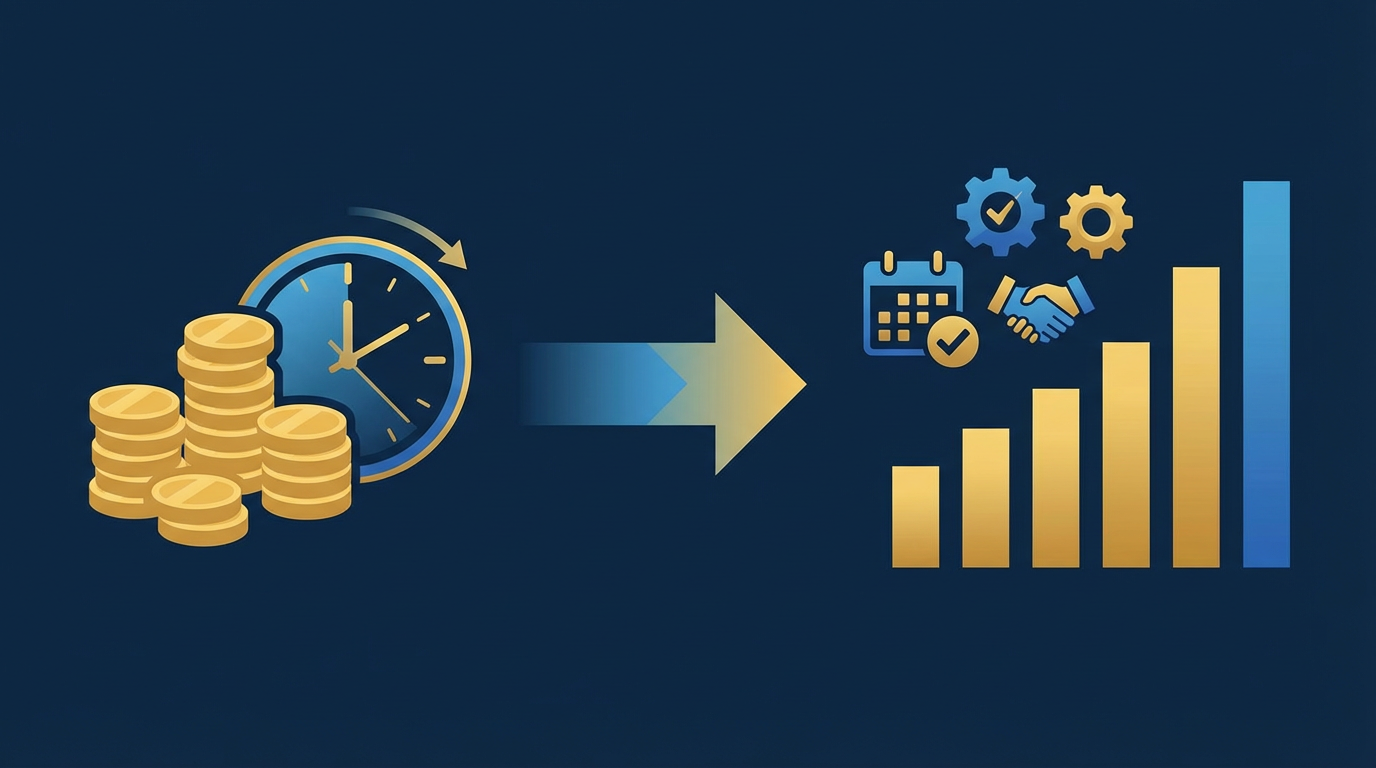
The question isn't whether you can afford venue booking software. It's whether you can afford to keep doing without it.
The Real Numbers: A Sample ROI Calculation
| Cost Category | Spreadsheet (Annual) | Book a Space (Annual) | Annual Saving |
|---|---|---|---|
| Staff admin time (6hrs/wk × £25/hr × 52) | ✗£7,800 | ✓~£1,500 | £6,300 |
| Double-booking errors (2/yr × £1,500) | ✗£3,000 | ✓£0 | £3,000 |
| Missed upsell revenue (10% on £60K MICE) | ✗£0 captured | ✓£6,000 captured | £6,000 |
| Lost bookings — slow response (5% × £800) | ✗£2,400 lost | ✓£0 lost | £2,400 |
| Total annual impact | ✗£13,200 cost + lost | ✓~£1,500 platform cost | £17,700 net benefit |
Conservative Numbers, Real Impact
These numbers are conservative and based on a mid-sized operation. For larger venues with higher booking volumes, the gap widens considerably. The platform cost — a small fraction of the benefit — pays for itself within weeks, not years.
The False Economy of Cheaper Tools
There's a version of this conversation that involves cheaper alternatives — basic desk booking tools like Skedda, Robin, or Tactic. These are less expensive, but they're built for a different purpose: managing internal office space, not revenue-generating venue bookings.
They lack eProposal capability, dynamic pricing, F&B add-on management, and the hospitality-native workflows that MICE bookings require. Choosing a cheaper tool that doesn't capture upsell revenue or close proposals efficiently is not a saving — it's a more expensive version of the spreadsheet problem, with a monthly fee attached.
The right comparison isn't platform cost vs. zero. It's platform cost vs. total value delivered.
Making the Switch: Easier Than You Think
Book a Space — Go-Live Timeline
- 1Day 1 — Account setup
Initial space configuration with onboarding support.
- 2Days 2–3 — Configuration
Pricing rules, F&B packages, and add-ons configured.
- 3Day 4 — Widget live
Branded booking widget live on your website.
- 4Day 5 — Go-live
Team training and go-live — first online bookings coming in.
- 5Week 2+ — Reporting baseline
Historical data imported, full reporting baseline established.
Frequently Asked Questions
Book a Space platform data shows around 6 hours per week on manual booking admin — data entry, confirmations, deposit chasing, and error correction. At £25/hour that's £7,800 per year in admin time alone (6 hrs/week × £25/hour × 52 weeks), before counting any revenue impact from errors or missed upsells.
Four categories: (1) Staff time on manual admin; (2) Error costs from double bookings and missed holds; (3) Missed upsell revenue from no systematic add-on presentation; (4) Lost bookings from slow response to enquiries received outside hours.
With Book a Space, go-live typically takes under a week. Day 1 account setup, Days 2–3 configuration, Day 4 widget live on website, Day 5 team training and first bookings. Historical data can be imported during onboarding.
No. Book a Space is designed to be intuitive from day one. Most team members are fully comfortable within a few hours. The onboarding team provides live support during initial setup.
Historical data can be imported into Book a Space during the onboarding process, ensuring continuity across customer records, booking history, and reporting baselines.
See our pricing — probably less than you think.
Book a personalised demo. We'll walk you through a real ROI calculation for your specific venue size and booking volume.
Book a Demo